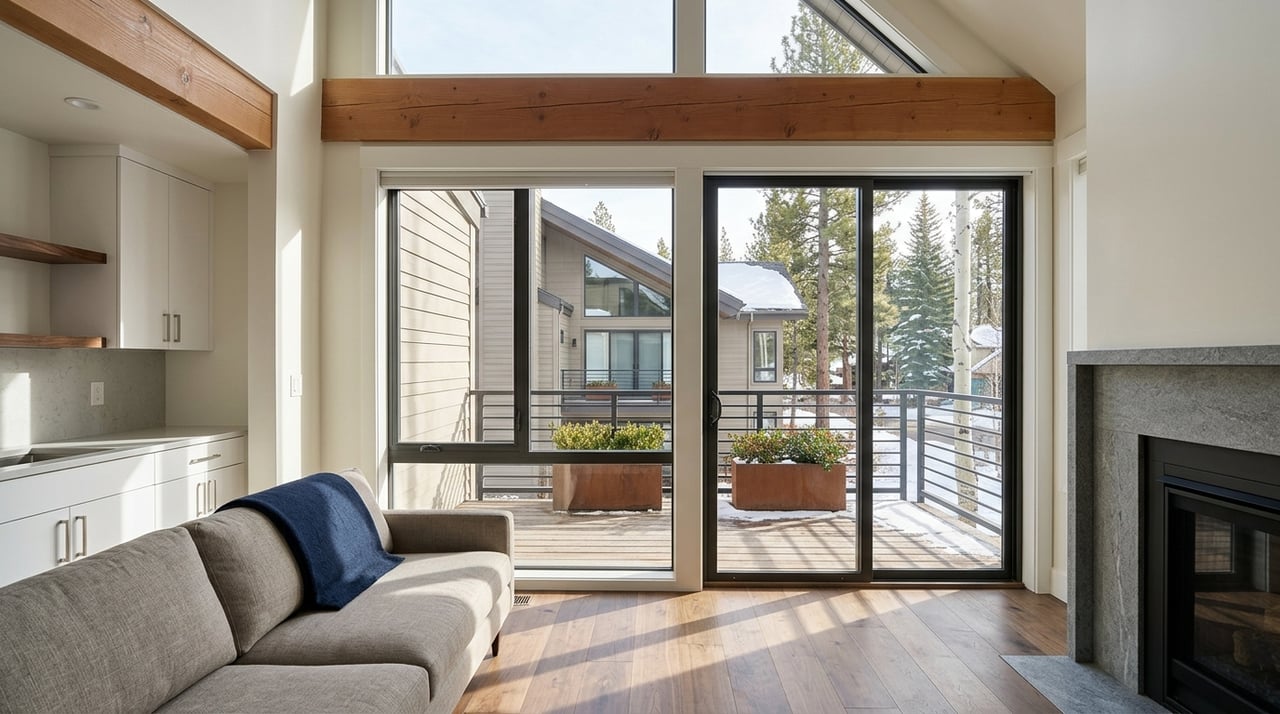
Condo Or House In Tahoe City? How To Decide
July 2, 2026
Wondering whether a Tahoe City condo or house is the better fit for your lifestyle? It is a common question, especially when you are balancing weekend convenience, long-term value, privacy, and the realities of owning property in the Tahoe Basin. The right answer depends less on the label and more on how you plan to use the property, what level of upkeep you want, and whether rental flexibility matters to you. Let’s dive in.
The condo versus house decision starts with what you actually own. In a condo or other common-interest property, you usually own your individual unit while sharing ownership or use of common areas and facilities with other owners. That setup typically comes with automatic HOA membership, along with dues, assessments, and rules you must follow.
A single-family house is usually more straightforward. In a standard subdivision, you generally own the home and the lot without shared common-area ownership. In practical terms, that often means more control over your property, but also more direct responsibility.
This difference shapes almost every part of ownership. A condo often gives you shared maintenance and community governance, while a house usually gives you more privacy and independence. The tradeoff is that a house also puts more of the workload on you.
Maintenance matters in any market, but it matters even more in Tahoe City. Snow, seasonal access, and exterior upkeep can quickly become major parts of the ownership experience, especially if this will be a second home or you plan to spend time away.
With a condo, exterior tasks are often handled through the HOA. That can make ownership feel more manageable if you want a lock-and-leave property for weekends, holidays, or longer gaps between visits. Still, HOA dues are only part of the cost picture, because associations may also levy special assessments for large repairs or unexpected expenses.
With a house, you are usually responsible for maintaining the structure, systems, and grounds yourself. That can include winter prep, snow management, repairs, and ongoing exterior work. If the home is on a private road, that matters too, because Placer County maintains snow removal on county-maintained roads in eastern Placer County, but not on private roads.
Your day-to-day goals in Tahoe City can also point you in the right direction. If you picture easy weekends, quick walks to town, and simple access to lakefront amenities, a condo or lower-maintenance home near the downtown core may feel like the better match.
Tahoe City offers public amenities that support that kind of lifestyle. Commons Beach is maintained by the Tahoe City Public Utilities District under contract with the county, and the area benefits from pedestrian and bicycle improvements connecting downtown to the lake and regional trail corridors. Placer County also notes transportation options such as the Tahoe City Transit Center, TART, and TART Connect.
That kind of access can reduce how much driving you need to do while you are in town. For some buyers, that makes a condo especially appealing because it pairs lower upkeep with a more compact, convenient home base.
A house may make more sense if your priority is privacy, more outdoor space, or greater separation from neighbors. If you want room to spread out, more control over the property, or a setting that feels more tucked away, a single-family home often aligns better with those goals.
If rental income is part of your plan, this is where the condo-versus-house decision can become much more property specific. In Tahoe City, the better question is often not "condo or house?" but "can this specific property be rented the way I want to use it?"
In Placer County, a short-term rental is a residential unit rented for 30 days or fewer. The county requires a valid short-term rental permit, a Transient Occupancy Tax certificate, fire life safety and defensible-space inspections, and a local contact person who can be reached 24/7 and lives within 35 driving miles of the property. Permits can also be suspended if required inspections are not on file.
As of amendments effective January 16, 2025, Placer County says a 30-night minimum rental requirement begins once the short-term rental cap of 3,900 is reached, excluding owner-occupied short-term rentals. The county also notes that multiple short-term rentals per property may be allowed under specific conditions. That means rental planning should be based on current permit status and property details, not assumptions.
Condos can have an extra layer of restrictions beyond county rules. HOA governing documents, including CC&Rs and operating rules, may limit rental use even if the county would otherwise allow it. That is why reviewing HOA documents carefully is essential before you commit.
There is also a separate condo-hotel pathway in Placer County. If a property is approved as a condo-hotel, individual short-term rental permits are not required for the units. If it is not approved as a condo-hotel, each operator needs a permit.
In the Tahoe Basin, inspection logistics can differ by property type. Placer County directs single-family homeowners to request defensible-space inspections directly. For condo or townhouse properties with HOA-managed landscaping, owners can request an inspection or report copy through the North Tahoe Fire process.
Here is a simple way to compare the two in Tahoe City:
| Factor | Condo | House |
|---|---|---|
| Ownership | Unit ownership plus shared common areas | Home and lot ownership |
| Maintenance | Lower exterior responsibility, HOA-managed in many cases | Owner handles most maintenance directly |
| Monthly costs | HOA dues and possible special assessments | No HOA in many cases, but direct repair and upkeep costs |
| Privacy | Typically less privacy and closer proximity to neighbors | Typically more privacy and separation |
| Flexibility | Must follow HOA rules and governing documents | More personal control, subject to applicable local rules |
| Winter logistics | Often simpler for absentee owners | May require more active snow and access management |
| Rental review | County rules plus HOA rules | County rules, plus property-specific practical considerations |
If you are still deciding, it helps to start with how you will actually use the property. A condo often fits buyers who want a convenient Tahoe base, lower exterior maintenance, and a simpler ownership experience when they are not in town. It can be a strong option if you are comfortable with dues, community rules, and the possibility of special assessments.
A house often fits buyers who value privacy, control, and outdoor space enough to take on more responsibility. That may include maintenance, repairs, winter access, and wildfire-preparedness tasks. If you want more flexibility in how the property feels and functions day to day, a house may be the better long-term fit.
If renting matters, make that a front-end part of your search. The key is confirming that the specific property works with both Placer County requirements and any HOA restrictions before you move forward.
To make a confident choice in Tahoe City, review these items early in the process:
The best choice is the one that fits your lifestyle, your time horizon, and your comfort level with upkeep and rules. In Tahoe City, that usually means looking beyond square footage and focusing on how ownership will feel in every season.
If you want help weighing specific Tahoe City condos and houses, Tricia Higgins can help you compare options, review disclosures, and focus on the details that matter most for how you plan to live, invest, or spend time in Tahoe.


Tricia approaches real estate with the same dedication as the tech industry. Buyers, sellers, and investors can expect reliability, integrity, and a “can-do” work ethic. Her vast international corporate experience brings a welcome level of clear-headed negotiation skills. Contact her today!